How to Make a Pet Memorial From a Photo
Which photo to choose, what to make (a plaque, an ornament, a night light or a keychain), what to write on it, and how to make it last.
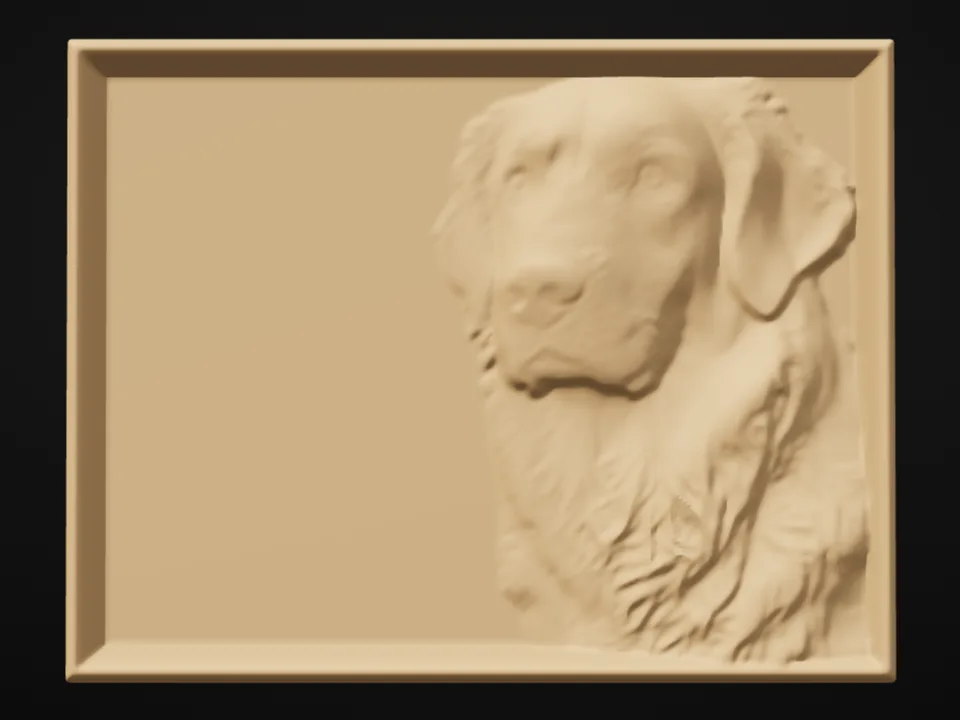
A memorial you can hold says something a photo on a screen does not. A relief keeps a pet's face in shape and texture: the line of an ear, the curl of the fur, the way they looked at you. Here is how to make one that does them justice.
Choose a clear photo of your pet
The photo matters more than any setting.
- The eyes in focus. Look at the photo full size: if the eyes are soft, the relief will be too.
- Light from one side. Side light shows the shape of the face; a flash straight on flattens it.
- The face large in the frame. A portrait where the head fills a good part of the picture beats a full-body shot taken from across the yard.
- A plain background, if you have one. It is not required: the studio drops the background, and Trace the subject finds the outline exactly when depth alone cannot tell a dog from the lawn.
If you only have one photo, use it. A dark photo is worth brightening on your phone before you open it: the depth model reads shape, and shadows hide it.
Choose a plaque, ornament or night light
- A plaque. A framed relief with their name and years, 4 × 6 to 8 × 10 inches, for a shelf or a wall. To carve one in hardwood or stone, open the CNC relief tool to set its depth and export format.
- An ornament. Their face on the front and their name on the back, to hang every December.
- A lithophane night light. The lithophane maker uses the photo's brightness to create a panel or lamp that glows when backlit.
- A keychain or a pendant. Use the photo keychain maker to make a keepsake cut to their outline.
What to write
Keep it short; relief lettering needs room. A name with the years, such as Max · 2012 – 2026, and one line:
- Forever in our hearts
- Over the rainbow bridge
- Good boy, or good girl
- Until we meet again
On a round piece the words run around the rim; on a plaque they sit in two straight lines below the face.
Making it last
- Indoors, PLA is fine; a light, matte filament shows the relief best, and a dry-brushed darker paint brings out the fur.
- Outdoors, PLA softens in the sun. Print a garden marker in PETG or ASA, or carve the depth map into stone or a hardwood and finish it for outdoor use.
- On a laser, use the 16-bit depth map in your software's 3D engraving mode, and test on scrap of the same material first.